
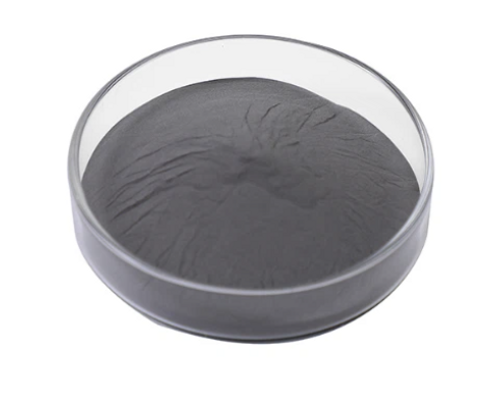
One of the most crucial choices in an additive manufacturing project is selecting an appropriate powder. The powder influences the processing of the material, the ability of the parts to be produced accurately and the properties of the part that could be achieved. But there is no universal powder that performs the same for all additive manufacturing processes. The selection of the right one will depend on the production technology, the components, the properties of the material and the desired final performance.
Start With the Manufacturing Process
First, the method of additive manufacturing used should be considered. Depending on the technology, the powders are used differently, and their material requirements may differ.
In powder bed fusion processes, such as, for instance, powder bed fusion, powder properties have to be carefully controlled to build successive layers. Other processes may require different particle sizes, flowability, densities or thermal properties.
Manufacturers need to determine the specific equipment and process parameters that are required before choosing a powder. A powder that works well in one system may not work well in another.
Look at Particle Size and Distribution
The particle size is an important parameter due to its impact on layer formation, packing behavior, flow and the final surface properties of a printed part.
A uniform particle size distribution may lead to more predictable powder handling and processing. If there are too many inappropriate particles in the powder, it can impact the uniformity of material flow in the manufacturing process.
The optimum range is determined by the manufacturing technology and equipment. The equipment manufacturer’s requirements should therefore be checked by the buyer before ordering, and the requirements compared with the powder specification.
Consider Powder Shape and Flowability
The shape of the particles can influence the flow properties of powder through handling and processing systems. Spherical particles can also be useful in terms of flow properties, but the shape required for the process varies.
Low flowability may pose problems in powder delivery, or layer spreading. When powders clump up, they leave bare patches all over the bed.
When evaluating Additive manufacturing powders, manufacturers should therefore consider morphology and flow behavior alongside chemical composition. These physical properties can have a direct effect on process consistency.
Match the Material to the Finished Part
The final choice of powder should be based on the desired properties of the finished part. The choice can be affected by mechanical strength, hardness, resistance to high and low temperatures, corrosion, density, conductivity and weight.
For instance, a lightweight aerospace part might need to be made of a different material than a wear-resistant industrial part. A part that is subjected to high temperatures may require an alloy with adequate properties when in service.
The performance requirements are useful to avoid making the selection of the material the determining factor in the manufacturing process.
Understand the Role of Specialty Metal Powders
For some applications, materials with more specific properties than the standard production alloys are needed. These materials can be chosen because of their specific mechanical, thermal, electrical or chemical properties.
Specialty metal powders can be beneficial when manufacturers are creating a difficult part or dealing with an advanced application. But sometimes special materials can also necessitate more careful control of the processing conditions.
Therefore, the compatibility between the powder composition and printing parameters should be assessed in advance of production.
Review Purity and Material Consistency
In applications where slight variation in composition can have an impact on the properties of the finished parts, powder purity is important. Contaminants can affect the processing behavior or properties of the finished part.
Repeat production requires material consistency as well. For businesses that manufacture several parts, consistency in powder properties from one batch to the next is crucial.
For certain applications, buyers might require documentation regarding chemical composition, particle size distribution, morphology and other properties.
Consider Powder Handling and Reuse
When buying powder, it is also important to take into account powder management. Powder quality can be influenced by the storage conditions, moisture, contamination risk, and handling procedures.
Unused powder may be recovered and reused in controlled conditions for some AM processes. Reuse policies, however, will vary with the material, equipment and manufacturing process.
The development of proper handling practices can help to ensure uniform production and minimize wastage of material.
Conclusion
Choosing the correct powder for additive manufacturing involves balancing the process and final part. The result can be affected by particle size, particle shape, flowability, purity, handling of the material, and repeatability. Before selection of a material, manufacturers should determine their application needs and equipment specifications. For companies interested in customized powder solutions, they can check out the materials available and consult with a suitable supplier about sourcing needs at regmetals.com. Advanced manufacturing can become more predictable, and enable consistent component quality through careful selection.