
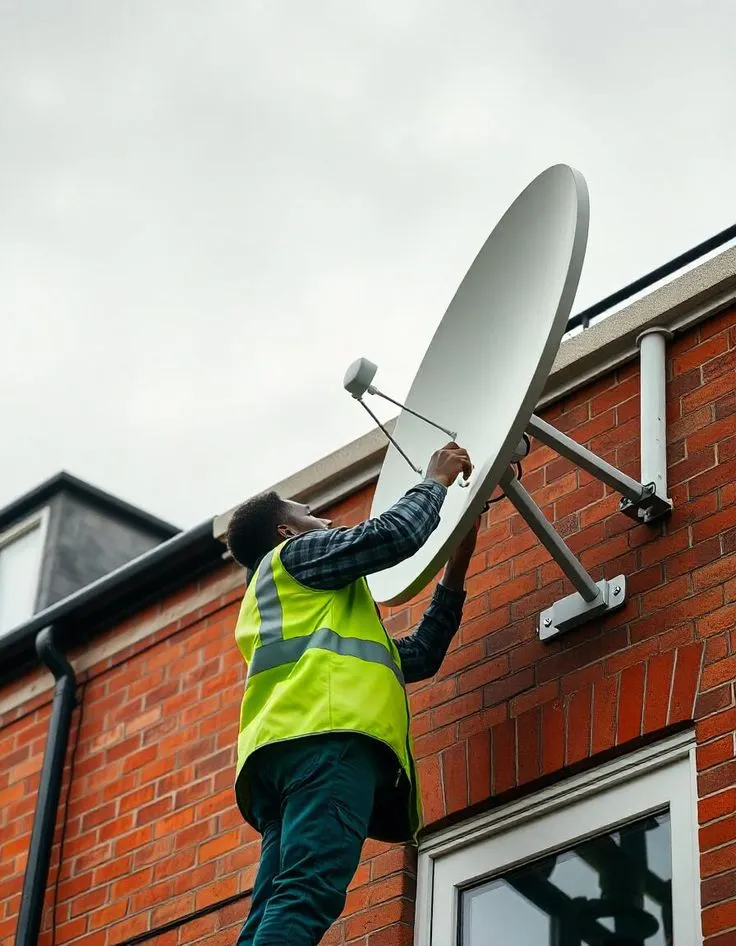
Moving day brings enough decisions without unexpected television reception problems. A satellite dish may already be attached to the new property, yet its presence tells you very little about whether the equipment still works or suits your viewing plans. Old cables, abandoned receivers and unfamiliar wall sockets can add confusion, especially when previous occupants have left no instructions. Before ordering replacement hardware or arranging installation work, it is worth assessing what is already available, checking its condition and understanding how your household intends to watch television.
Identify What the Previous Occupants Left Behind
Begin with a straightforward visual survey. Look for a satellite dish outside, note where its cables enter the building and identify the sockets near proposed television positions. If a receiver has been left behind, record its model rather than assuming it will work with every service. A dish can remain mounted long after a previous subscription or receiver has been removed.
Avoid climbing onto a roof or adjusting unfamiliar equipment. Dish brackets, exterior cables and elevated mounting points should be examined by someone who can reach them safely. Ground-level photographs can help explain the setup to an installer.
Separate the Dish From the Television Service
A satellite dish receives signals; the television service and receiver determine which channels can be decoded and displayed. This distinction matters when inheriting equipment associated with a former household’s subscription. A working dish does not automatically mean a paid service transfers to a new occupant, nor does it prove the existing receiver is compatible with a free-to-air platform.
If you are considering Sky satellite dish installation, first establish whether a usable dish is already in place. A technician can check its alignment, cabling and compatibility with the intended receiver. Reusing suitable components may reduce waste, but it is not sensible to retain damaged hardware simply because it is already attached to the wall.
Check Reception Before Decorating
Renovation plans can accidentally hide the easiest cable routes. Before moving furniture into position or replastering rooms, locate existing coaxial cables and inspect accessible wall outlets for obvious damage. A cable that appears intact may still have a poorly terminated connector or an unsuitable route.
The position of the dish matters as much as its condition. Trees, neighbouring extensions and other obstructions may interfere with the necessary line of sight. Check exterior equipment restrictions, particularly for flats, listed buildings or conservation areas.
Decide How Many Rooms Need Television
A single living-room screen is relatively straightforward to plan. A family hoping to watch different programmes in bedrooms and a kitchen may need a more considered arrangement. Each additional receiver or connection can place different demands on cables and distribution hardware, depending on the satellite equipment in use.
Before arranging Aerial and satellite services, explain whether each room needs independent channel selection, whether existing outlets can be reused and whether terrestrial television is also required. A combined plan can avoid installing one system today and discovering that it cannot conveniently serve another room tomorrow.
Ask Better Questions During a Technical Survey
An installer will be able to assess details that are difficult to judge from appearance alone. To make the visit productive, prepare a short set of questions:
-
Is the current dish securely mounted and correctly aligned?
-
Are the existing cables and connectors still suitable?
-
What receiver or television tuner is required?
-
Can existing outlets serve the intended rooms independently?
-
Would repairing a component be more sensible than replacing it?
-
Are there safe and accessible routes for any additional cabling?
Ask for an explanation of the proposed work, including anything that cannot be confirmed without testing. The cheapest option is not necessarily the most practical.
Make a Clear Record for Future Changes
Once the system is working, keep basic details of the dish, receivers, cable routes and installed connections. Label accessible distribution points where appropriate, and retain any operating instructions. These small steps can make future troubleshooting easier when furniture moves, a receiver is upgraded or another room needs a connection.
It is also worth testing reception in the evening and checking that the channels the household actually watches are available. A successful installation should meet everyday needs, not merely show that a signal is present.
Conclusion
An existing dish is a starting point, not a guarantee of reliable satellite television. New homeowners benefit from checking hardware condition, receiver compatibility, signal access and planned room use before paying for replacements. This approach can protect finished interiors from unnecessary work and reduce the likelihood of repeated visits. In Scotland, techtwins.co.uk outlines technical support for television reception and distribution. A little investigation before settling in can help make the new property’s viewing arrangements simpler, tidier and more dependable.